Why GCC Countries Are Hiring More BIM Engineers Than Ever in 2026
The Gulf Cooperation Council (GCC) region is witnessing one of the biggest construction booms in history. Countries like the UAE, Saudi Arabia, Qatar, Oman, Kuwait, and Bahrain are investing billions of dollars in smart cities, mega infrastructure, commercial developments, airports, hospitals, and sustainable urban projects.
As these projects become larger and more complex, one profession has become more valuable than ever before:
The BIM Engineer.
If you’re a Mechanical, Electrical, Civil, or Architecture graduate wondering whether BIM is a good career choice in 2026, the answer is a resounding YES.
Let’s explore why GCC countries are recruiting BIM professionals at an unprecedented pace.
The Construction Boom Across the GCC
Governments across the GCC are diversifying their economies beyond oil and investing heavily in infrastructure.
Major developments include:
- Smart Cities
- Metro Rail Projects
- International Airports
- Luxury Hotels & Resorts
- Hospitals
- Industrial Facilities
- High-Rise Commercial Towers
- Data Centres
- Stadiums
- Mixed-Use Developments
These multi-billion-dollar projects require seamless collaboration between architects, structural engineers, MEP consultants, contractors, and project managers.
This is exactly where BIM becomes essential.
What Is Driving the Demand for BIM Engineers?
1. Mega Projects Require Digital Collaboration
Today’s construction projects involve thousands of drawings and multiple engineering disciplines.
Traditional 2D CAD workflows are no longer sufficient.
BIM enables teams to work on a single coordinated 3D model, reducing errors and improving communication across all stakeholders.
As project complexity increases, so does the need for skilled BIM engineers.
2. Governments Are Mandating BIM
Many government authorities and leading developers across the GCC now require BIM deliverables for large-scale projects.
BIM has become a project requirement rather than an optional service.
This has significantly increased demand for professionals who understand BIM workflows, coordination, and model management.
3. Faster Project Delivery
Construction schedules are becoming tighter every year.
Developers want projects delivered faster without compromising quality.
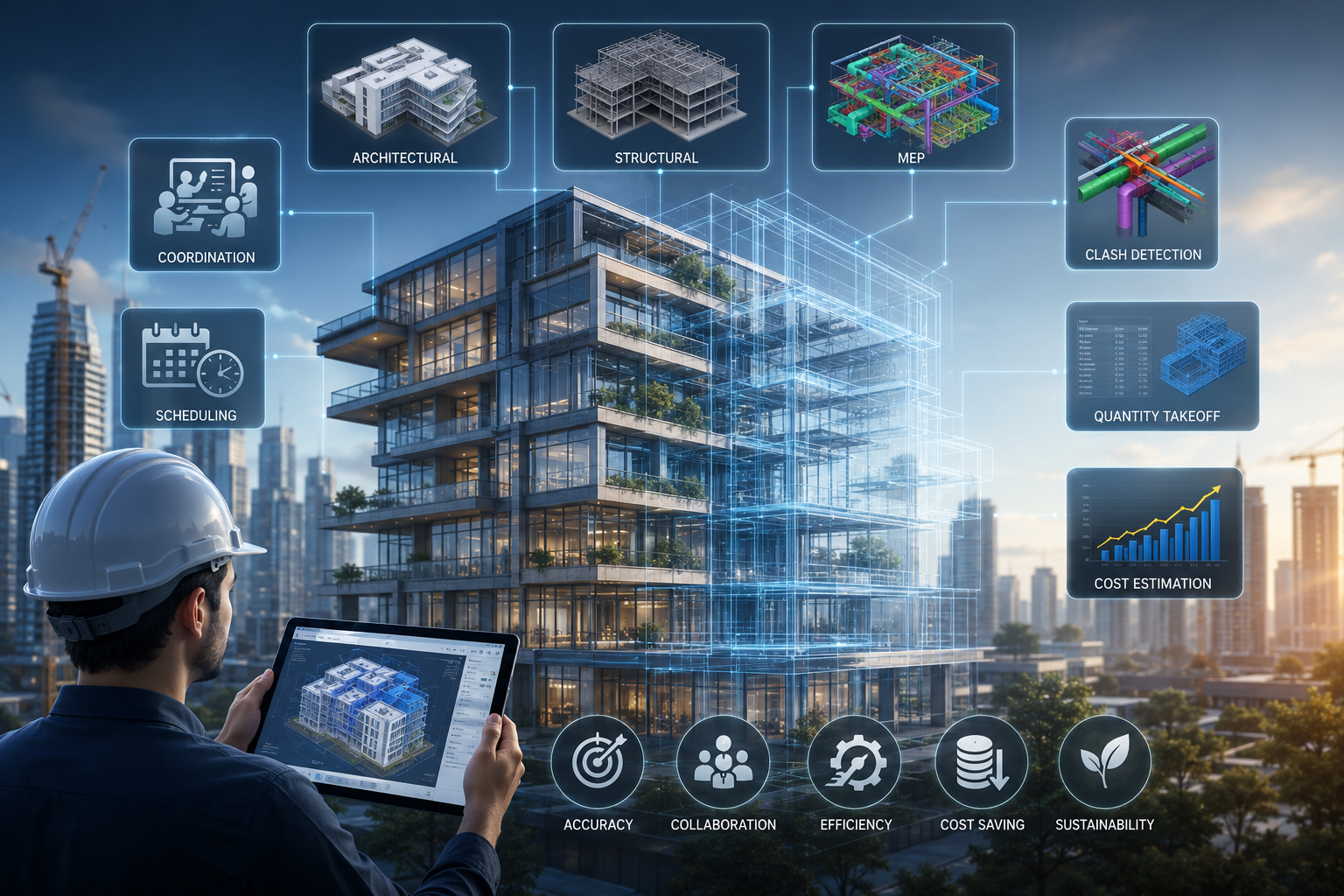
BIM helps by:
- Detecting clashes before construction
- Improving coordination
- Reducing rework
- Enhancing planning
- Increasing productivity
Companies therefore prefer engineers who can contribute to faster project execution.
4. Growing Adoption of Digital Construction
The GCC is rapidly embracing digital transformation.
Technologies such as:
- Artificial Intelligence (AI)
- Digital Twins
- Cloud Collaboration
- 4D BIM
- 5D BIM
- Reality Capture
- Laser Scanning
- IoT-enabled Smart Buildings
are becoming increasingly common.
BIM engineers are at the centre of this digital revolution.
5. Sustainability and Green Buildings
Many GCC countries have ambitious sustainability goals.
Energy-efficient buildings require careful coordination of HVAC, electrical, plumbing, and fire protection systems.
BIM enables engineers to:
- Improve energy performance
- Reduce material wastage
- Optimize building services
- Support sustainable design
This makes BIM professionals even more valuable.
Why MEP BIM Engineers Are in High Demand
Mechanical, Electrical, Plumbing, and Fire Protection systems account for a significant portion of any modern building.
Poor coordination between these services can lead to:
- Construction delays
- Cost overruns
- Site conflicts
- Rework
- Project disputes
MEP BIM Engineers help eliminate these issues before construction begins.
Their responsibilities include:
- 3D Modeling
- Clash Detection
- Shop Drawings
- Coordination Meetings
- Quantity Extraction
- BIM Documentation
- Construction Support
This expertise makes them highly sought after by consultants and contractors alike.
The Skills GCC Employers Are Looking For
Recruiters are increasingly looking for engineers with a combination of technical and digital skills.
The most in-demand skills include:
Technical Knowledge
- HVAC Systems
- Electrical Systems
- Plumbing Systems
- Fire Fighting Systems
BIM Software
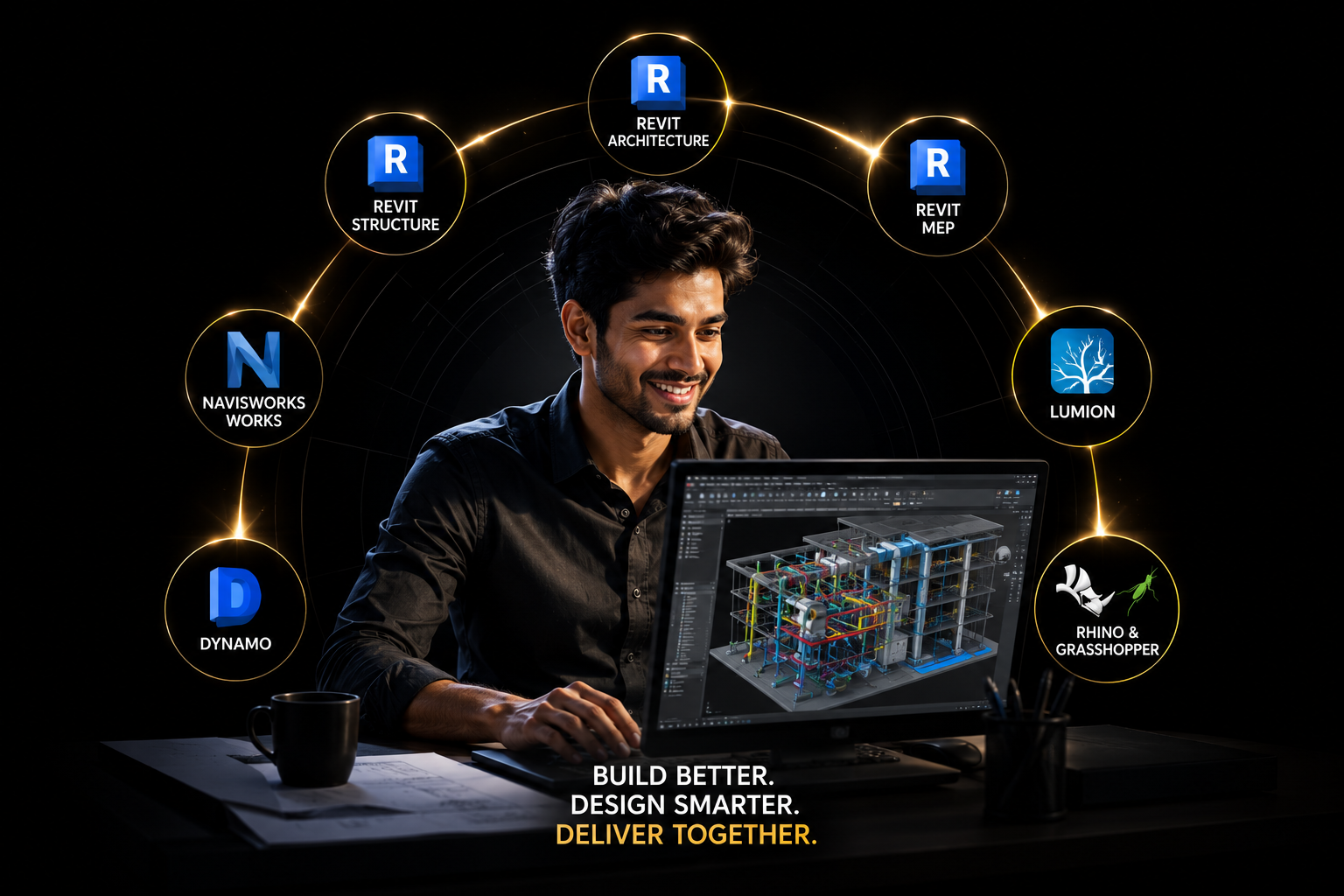
- Autodesk Revit MEP
- Navisworks
- AutoCAD
- BIM 360 / Autodesk Construction Cloud
Coordination Skills
- Clash Detection
- Model Coordination
- Shop Drawings
- Quantity Take-Off
- BIM Execution Plans
Soft Skills
- Communication
- Teamwork
- Problem Solving
- Time Management
- Client Coordination
Professionals with this skill combination stand out in today’s competitive job market.
AI Is Increasing the Value of BIM Engineers
Contrary to popular belief, Artificial Intelligence is not reducing the demand for BIM engineers.
Instead, AI is helping professionals:
- Automate repetitive tasks
- Improve productivity
- Generate documentation
- Enhance design analysis
- Deliver projects faster
Companies are now looking for engineers who understand both BIM workflows and AI-powered tools.
The future belongs to engineers who combine engineering expertise with digital intelligence.
Why Fresh Graduates Should Learn BIM
Many engineering graduates struggle to secure jobs because they lack industry-ready skills.
A BIM certification provides practical experience that employers value.
With the right training, fresh graduates can pursue careers as:
- BIM Engineer
- Revit MEP Engineer
- BIM Modeler
- BIM Coordinator
- HVAC BIM Engineer
- Electrical BIM Engineer
- Plumbing BIM Engineer
- Digital Construction Specialist
The demand continues to grow across the GCC.
How ACE India Helps Students Build Global Careers
At ACE India Training & Services Pvt. Ltd., we have been preparing engineers for international careers since 2007.
Our BIM Integrated MEP Training Program is designed to bridge the gap between engineering education and industry expectations.
Students gain hands-on experience through:
- Practical MEP Design
- Autodesk Revit MEP
- Navisworks
- BIM Coordination
- Live Industry Projects
- Site Visits
- Industry-Based Assignments
- Interview Preparation
- Placement Assistance
Our goal is not just to teach software—but to develop globally employable BIM professionals.
The Future Is Digital—and BIM Engineers Are Leading It
The construction industry is evolving faster than ever.
Companies across the GCC are no longer hiring engineers based solely on academic qualifications.
They are looking for professionals who can collaborate, coordinate, solve problems, and deliver projects using modern digital tools.
BIM has become the language of modern construction, and skilled BIM engineers are at the forefront of this transformation.
If you’re planning your engineering career in 2026, there has never been a better time to learn BIM.
Final Thoughts
The GCC construction industry is entering a new era of digital engineering.
Mega projects, smart cities, sustainable developments, and AI-driven construction are creating unprecedented opportunities for BIM professionals.
For engineering students and fresh graduates, this is more than a trend—it’s a career opportunity.
Invest in the right skills today, and you’ll be prepared for the projects shaping tomorrow’s skyline.
Ready to Build Your Global Career?
Join ACE India Training & Services Pvt. Ltd. and gain industry-ready expertise through our BIM Integrated MEP Training Program. Learn from experienced professionals, work on real-world projects, master BIM technologies, and prepare yourself for exciting career opportunities across the GCC and beyond.
The future of construction is digital. The future of digital construction belongs to skilled BIM engineers.