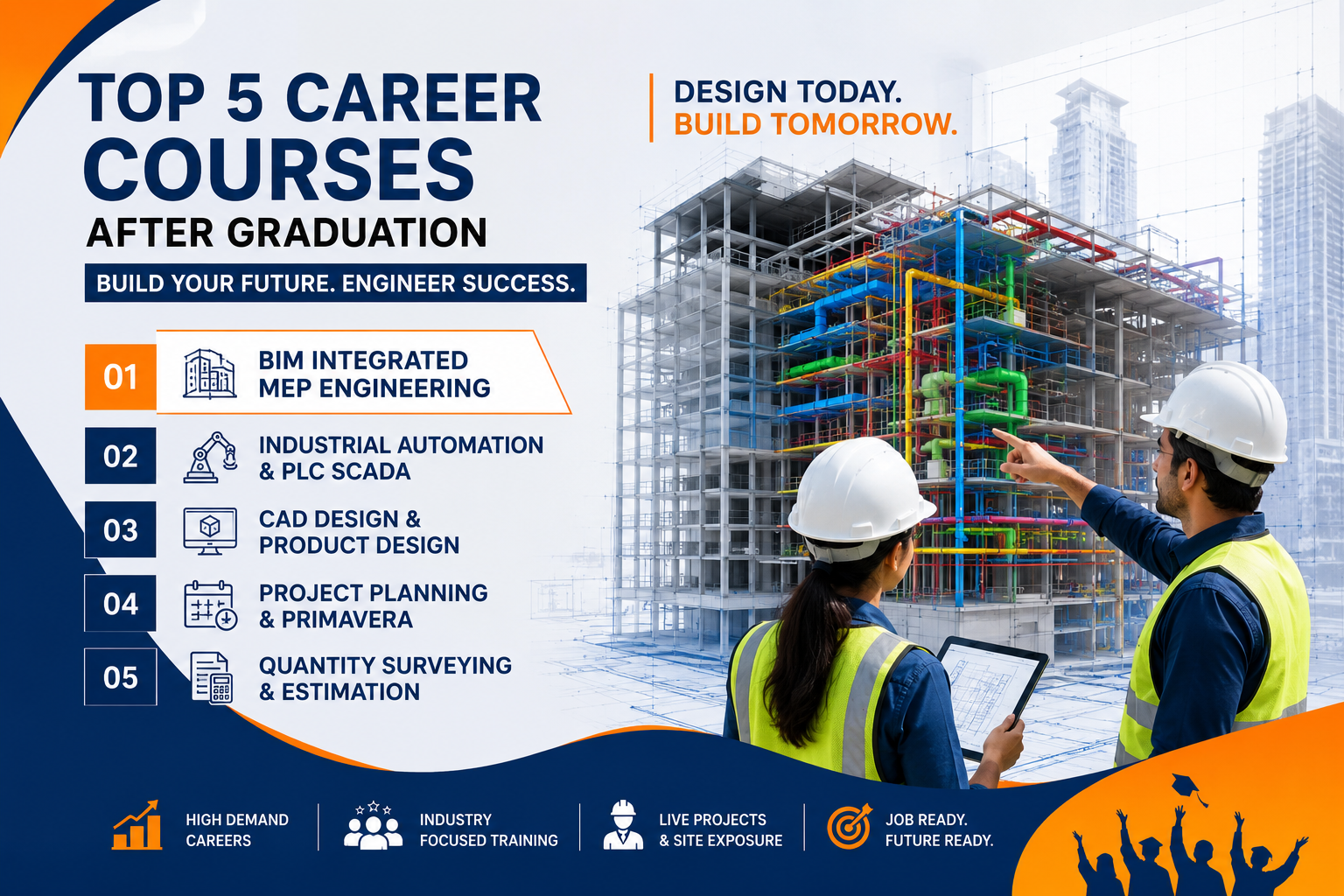
Top 5 Career Courses After Mechanical & Electrical Engineering
1. BIM Integrated MEP Engineering ⭐ (Highly Recommended)
The construction industry has rapidly shifted from traditional 2D drafting to intelligent 3D digital modeling. This transformation has created tremendous demand for engineers who understand both engineering concepts and BIM software.
A BIM Integrated MEP Course combines:
- Mechanical HVAC Design
- Electrical Building Services
- Plumbing & Fire Fighting Systems
- Building Information Modeling (BIM)
- Industry Software Training
- Live Project Experience
Students learn not only engineering calculations but also how to design complete building services using internationally accepted workflows.
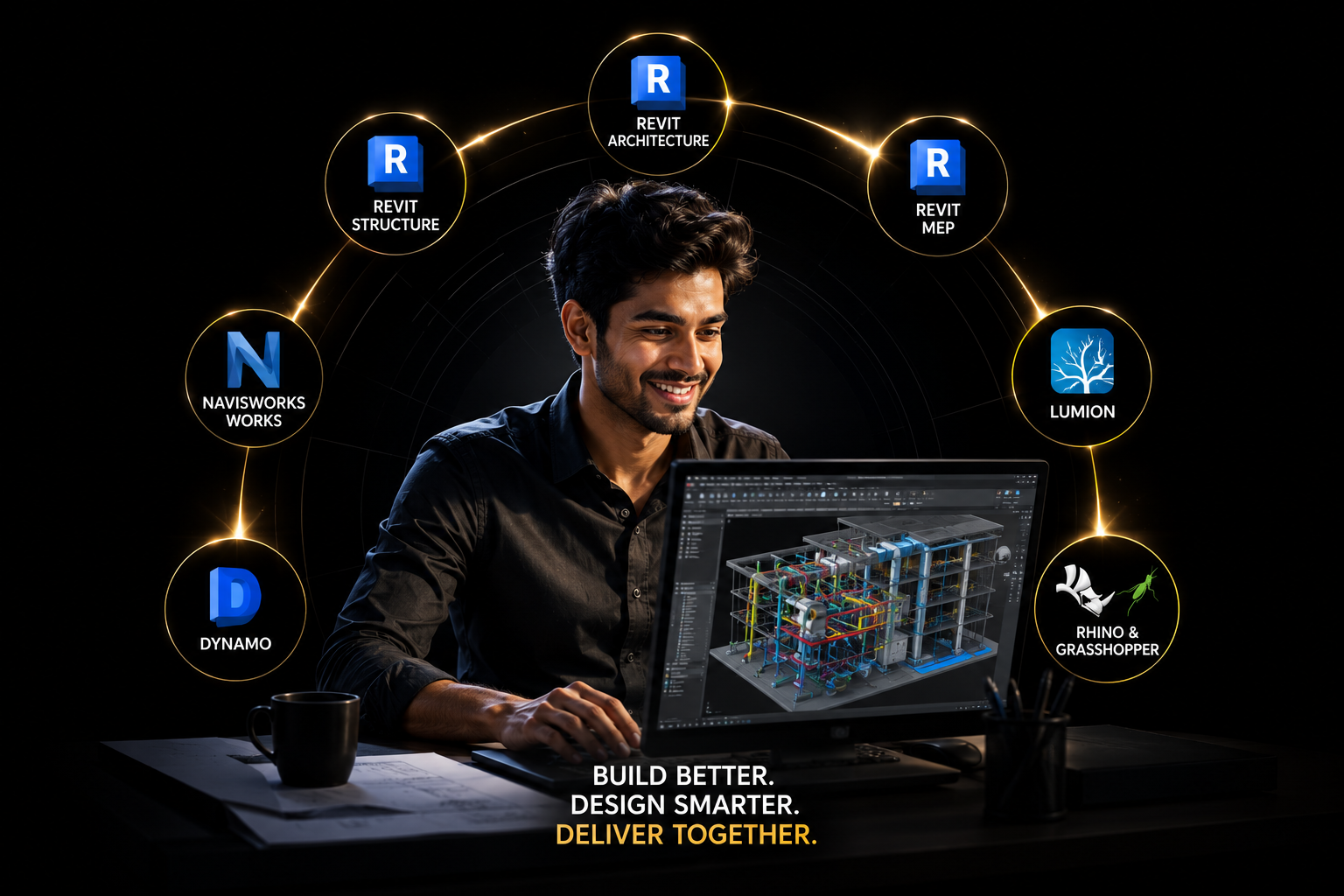
Software Covered
- AutoCAD
- Revit MEP
- Navisworks
- BIM Coordination Tools
Career Opportunities
- BIM Engineer
- MEP Design Engineer
- HVAC Design Engineer
- Electrical Design Engineer
- Plumbing Design Engineer
- BIM Coordinator
- BIM Modeler
Industries Hiring
- Construction Companies
- MEP Contractors
- BIM Consultancies
- Design Consultants
- Infrastructure Projects
- Smart Building Projects
- Data Centers
- Hospitals
- Airports
- Metro Rail Projects
Why It Stands Out
Unlike software-only courses, BIM Integrated MEP training combines engineering knowledge with practical project execution, making graduates industry-ready from day one.
2. Industrial Automation & PLC SCADA
Industrial automation remains one of the strongest career paths for Electrical and Mechanical Engineers.
Students learn:
- PLC Programming
- SCADA Systems
- Industrial Sensors
- Control Panels
- Automation Logic
- Industrial Networking
Career Options
- Automation Engineer
- PLC Programmer
- Maintenance Engineer
- Commissioning Engineer
Suitable for graduates interested in manufacturing industries.
3. CAD Design & Product Design
Mechanical engineers interested in manufacturing, automotive, and product development can build careers in CAD design.
Popular software includes:
- AutoCAD
- SolidWorks
- CATIA
- Creo
- Inventor
Career Roles
- Design Engineer
- Product Designer
- CAD Engineer
- Mechanical Designer
Although valuable, this specialization focuses mainly on manufacturing rather than the booming construction industry.
4. Project Planning & Primavera
Large infrastructure and construction projects require skilled planning engineers.
Students learn:
- Primavera P6
- Microsoft Project
- Project Scheduling
- Resource Planning
- Cost Monitoring
Career Opportunities
- Planning Engineer
- Project Scheduler
- Project Coordinator
A good option for candidates interested in project management rather than design.
5. Quantity Surveying & Estimation
Quantity Surveying focuses on project costing and budgeting.
Students learn:
- BOQ Preparation
- Cost Estimation
- Tender Documentation
- Rate Analysis
- Contract Management
Career Roles
- Quantity Surveyor
- Estimation Engineer
- Billing Engineer
This field offers excellent opportunities, especially in Gulf countries.
Why BIM-Integrated MEP is the Fastest Growing Career Option
Today’s buildings are far more complex than ever before. Modern projects include:
- Smart Buildings
- Green Buildings
- High-rise Towers
- Hospitals
- Airports
- Metro Stations
- Commercial Complexes
- Industrial Facilities
Every one of these projects requires coordinated Mechanical, Electrical, and Plumbing systems designed using BIM technology.
Companies increasingly prefer hiring engineers who already understand these workflows, reducing training time after recruitment.
What Makes Graduates Employable?
Recruiters today look beyond academic marks. They value candidates who possess:
- Practical engineering knowledge
- Software proficiency
- Live project exposure
- Industry-standard workflows
- Coordination skills
- Communication skills
- Problem-solving ability
A professional BIM Integrated MEP course bridges the gap between classroom education and real-world engineering practice.
Career Scope in India and Abroad
The demand for BIM and MEP professionals continues to rise due to rapid infrastructure development.
India
Growing opportunities in:
- Commercial Buildings
- Residential Projects
- Hospitals
- Airports
- Metro Rail
- IT Parks
- Industrial Plants
- Smart Cities
International Opportunities
Countries with significant demand include:
- United Arab Emirates
- Saudi Arabia
- Qatar
- Oman
- Kuwait
- Singapore
- Australia
- United Kingdom
Many engineering consultancies serving international projects also hire remotely from India, offering global exposure without relocating initially.
Average Career Progression
A typical career path for a BIM Integrated MEP professional may look like this:
- Graduate Engineer Trainee
- BIM Modeler
- MEP Design Engineer
- BIM Coordinator
- Senior BIM Engineer
- BIM Manager
- Design Manager
- Project Manager
With experience, professionals can move into consultancy, project management, or specialized design roles.
Who Should Choose a BIM Integrated MEP Course?
This career path is ideal for:
- Mechanical Engineering graduates
- Electrical Engineering graduates
- Diploma holders in Mechanical or Electrical Engineering
- Freshers seeking industry-ready skills
- Engineers looking to transition into building services and BIM
How to Choose the Right Training Institute
Before enrolling, evaluate whether the institute offers:
- Industry-oriented curriculum
- Experienced faculty from the MEP industry
- Hands-on software training
- Live project exposure
- Site visits
- Placement assistance
- Interview preparation
- Portfolio development
- Practical assignments and assessments
The right training should prepare you not just to use software, but to solve real engineering challenges.
Final Thoughts
Choosing the right specialization after graduation can significantly influence your career trajectory. While there are many technical courses available, BIM Integrated MEP Engineering stands out because it combines engineering fundamentals, advanced digital tools, and practical project experience—all of which are highly valued by employers.
As the construction and infrastructure sectors continue to adopt BIM globally, professionals with integrated MEP and BIM expertise are positioned for strong career growth, diverse job opportunities, and the flexibility to work on projects in India and internationally.
If you’re a Mechanical or Electrical Engineering graduate aiming to build a future-ready career, investing in practical BIM Integrated MEP training can be a decisive step toward becoming an industry-ready engineer.
About ACE India Training & Services Pvt. Ltd.
With over 18 years of experience in technical education, ACE India Training & Services Pvt. Ltd. has trained thousands of Mechanical and Electrical Engineering graduates for careers in the MEP and BIM industry. Our BIM Integrated MEP Course combines engineering concepts, industry-standard software, live projects, site visits, and placement support to help students transition confidently from the classroom to the workplace.