Why the AEC Industry Will Continue to Grow – Even During Global Conflicts
Why MEP & BIM Engineers Have a Strong Future
The world is constantly facing economic uncertainty, geopolitical tensions, and conflicts such as potential confrontations between global powers. Many industries experience instability during such events. However, one sector that consistently proves its resilience is the Architecture, Engineering, and Construction (AEC) industry.
From economic recessions to global pandemics and wars, the construction sector has repeatedly recovered and expanded. In fact, crises often create even greater demand for infrastructure development, urbanization, and rebuilding.
For young engineers and professionals, especially those specializing in MEP (Mechanical, Electrical, Plumbing) and BIM (Building Information Modeling), the future remains extremely promising.
How Global Conflicts Impact the Construction Industry
When conflicts or geopolitical tensions occur, the immediate effects may include:
- Supply chain disruptions
- Increased material costs
- Temporary project delays
However, history shows that construction activity quickly rebounds after instability because countries must rebuild infrastructure, housing, hospitals, transportation networks, and energy systems. Research on conflict-affected regions indicates that reconstruction and infrastructure development become major economic drivers once stability returns.
In simple terms:
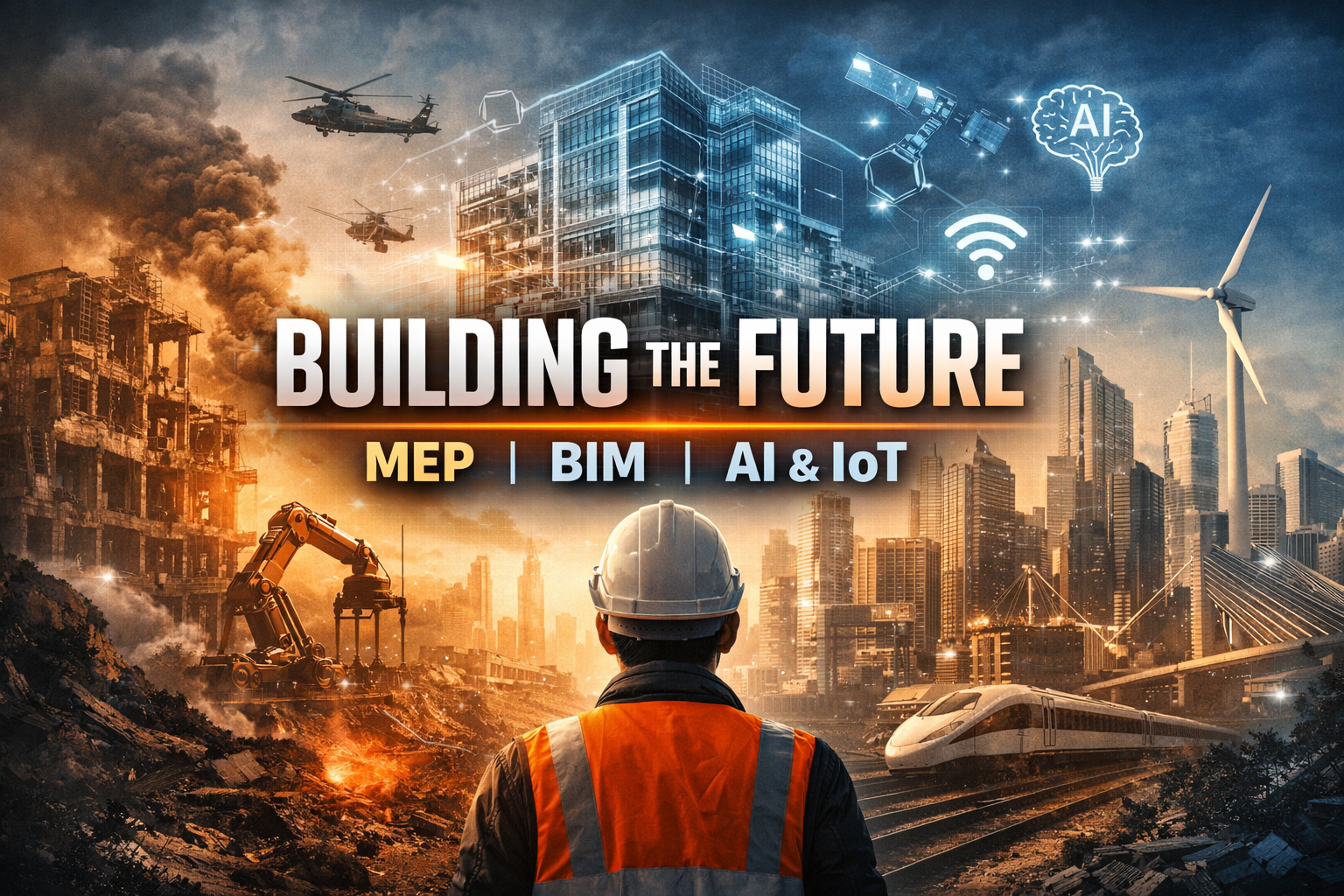
War destroys infrastructure — rebuilding creates massive engineering demand.
This creates enormous opportunities for:
- Engineers
- Designers
- BIM specialists
- Construction professionals
The Ever-Growing Demand for Infrastructure
The global population continues to grow rapidly, and cities are expanding faster than ever before.
This leads to increasing demand for:
- Residential buildings
- Hospitals and healthcare infrastructure
- Airports and transport networks
- Data centers and smart buildings
- Commercial and industrial facilities
Experts predict that the construction sector will undergo major transformation driven by digital technology, sustainability, and urban growth, making it more efficient and innovative.
No matter what happens geopolitically, people still need buildings, homes, offices, and infrastructure.
And every building needs MEP services.
Why MEP Engineering Will Always Be in Demand
In modern buildings, nearly 40–60% of project cost is related to building services such as HVAC, electrical systems, fire protection, plumbing, and energy management.
Without MEP systems, a building cannot function.
MEP engineers are responsible for:
- Air conditioning and ventilation (HVAC)
- Electrical power distribution
- Fire protection systems
- Plumbing and drainage systems
- Building automation systems
With the rise of smart buildings and energy-efficient design, the importance of MEP engineers is growing every year.
Future buildings will depend even more on:
- Energy-efficient HVAC systems
- Smart lighting
- Renewable energy integration
- Building automation systems
This ensures long-term career stability for MEP professionals.
Why BIM Is Becoming the Backbone of the Construction Industry
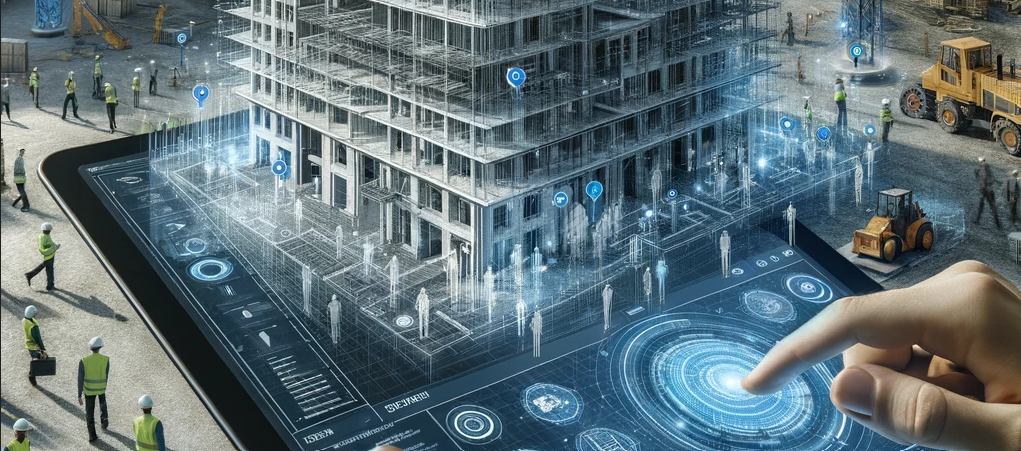
Building Information Modeling (BIM) is transforming how buildings are designed, constructed, and managed.
Many governments worldwide are now making BIM mandatory for large projects, especially in public infrastructure.
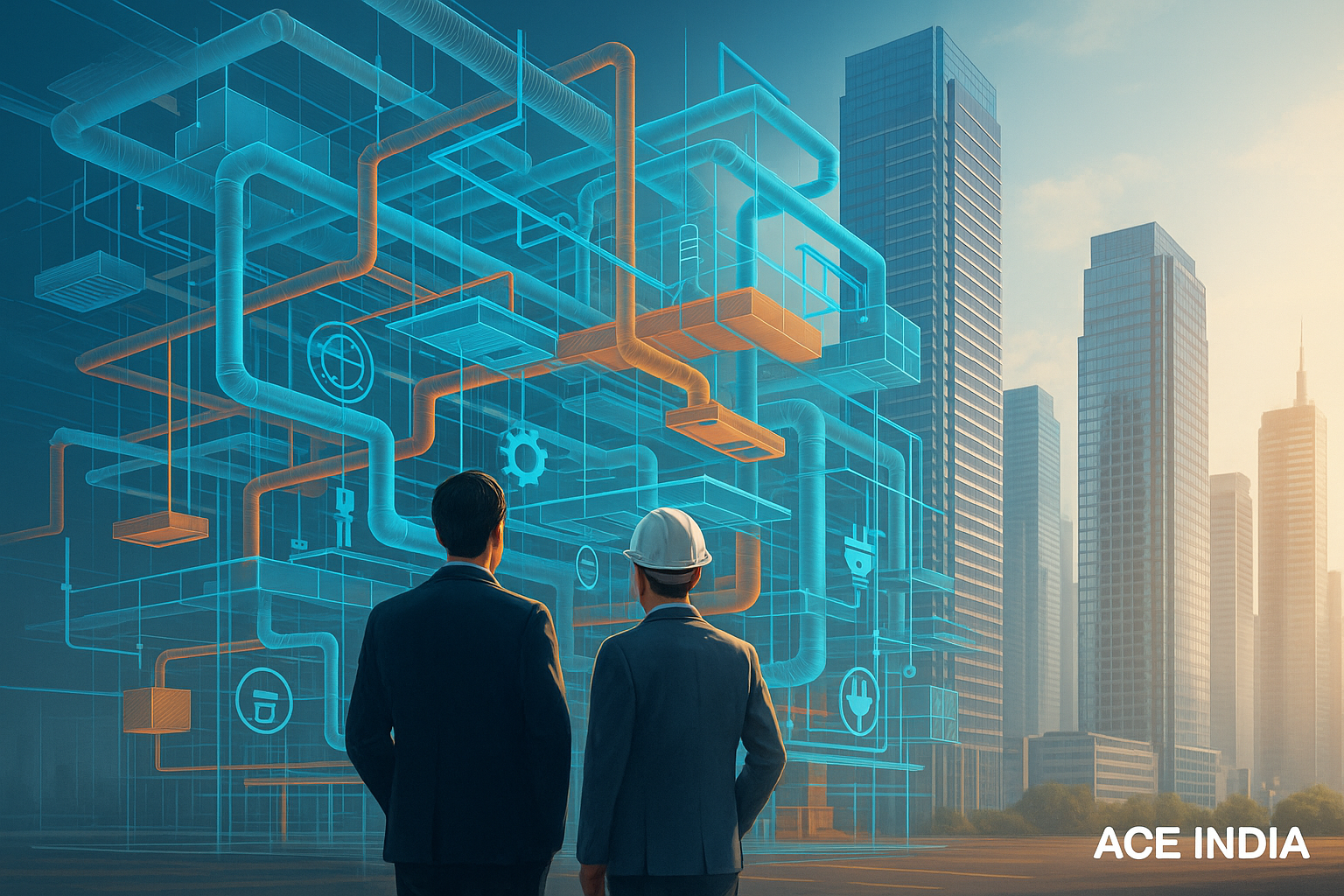
Today BIM is used for:
- 3D coordination between disciplines
- Clash detection before construction
- Cost estimation (5D BIM)
- Project scheduling (4D BIM)
- Facility management and digital twins
The global BIM market is expanding rapidly and is expected to reach billions of dollars as digital construction becomes standard practice.
This means companies around the world are actively searching for skilled BIM professionals.
How AI, IoT, and Digital Technologies Are Transforming Buildings
The future of construction will be deeply connected with technology.
Emerging technologies that will impact the AEC industry include:
Artificial Intelligence (AI)
AI is already being used in BIM workflows for:
- Automated clash detection
- Design optimization
- Predictive scheduling
- Risk analysis
AI helps engineers complete complex tasks faster and with greater accuracy.
Internet of Things (IoT)
IoT allows buildings to become smart and responsive.
Examples include:
- Smart energy monitoring
- Intelligent HVAC control
- Predictive maintenance
- Real-time building performance monitoring
Digital Twins
A digital twin is a virtual replica of a building that continuously updates using real-world data.
This allows engineers and facility managers to:
- Monitor building performance
- Optimize energy consumption
- Detect system failures early
These technologies are reshaping the AEC industry and creating new job roles for engineers with BIM and digital skills.
Why India Will Play a Major Role in Global BIM and MEP Services
India is rapidly becoming a global hub for engineering outsourcing and BIM services.
International construction companies increasingly rely on Indian engineers for:
- BIM modeling
- MEP design support
- Clash detection and coordination
- Quantity take-offs
- Construction documentation
Many firms operate with hybrid global teams, where design coordination happens across multiple countries.
This creates huge opportunities for engineers in India to work on international projects from India itself.
Why Fresh Engineers Should Consider Careers in the AEC Industry
Many young engineers today focus only on IT or software jobs. However, the AEC industry offers equally exciting opportunities, especially with digital transformation.
Benefits of choosing MEP or BIM careers include:
✔ Global job opportunities
✔ Work on iconic international projects
✔ High demand for skilled professionals
✔ Opportunities in smart city development
✔ Rapid technological advancement
✔ Long-term industry stability
The Future: Smart Cities and Sustainable Infrastructure
Governments worldwide are investing heavily in:
- Smart cities
- Sustainable infrastructure
- Green buildings
- Renewable energy systems
These initiatives will require millions of engineers globally.
Every smart building requires:
- Advanced HVAC systems
- Intelligent electrical systems
- Water management systems
- Energy optimization
Which means MEP and BIM engineers will be at the center of this transformation.
Conclusion: The AEC Industry Is Future-Proof
Despite global uncertainties, the AEC industry continues to evolve and grow.
From rebuilding infrastructure after crises to developing smart cities for the future, construction will always remain a cornerstone of economic development.
With the integration of AI, IoT, BIM, and digital engineering, the AEC industry is entering one of its most exciting phases.
For engineers looking for a stable, innovative, and globally relevant career, the path is clear:
MEP + BIM + Digital Construction = The Future of Engineering.