THE SKILL GAP THAT KEEPS THOUSANDS OF ENGINEERS UNEMPLOYED
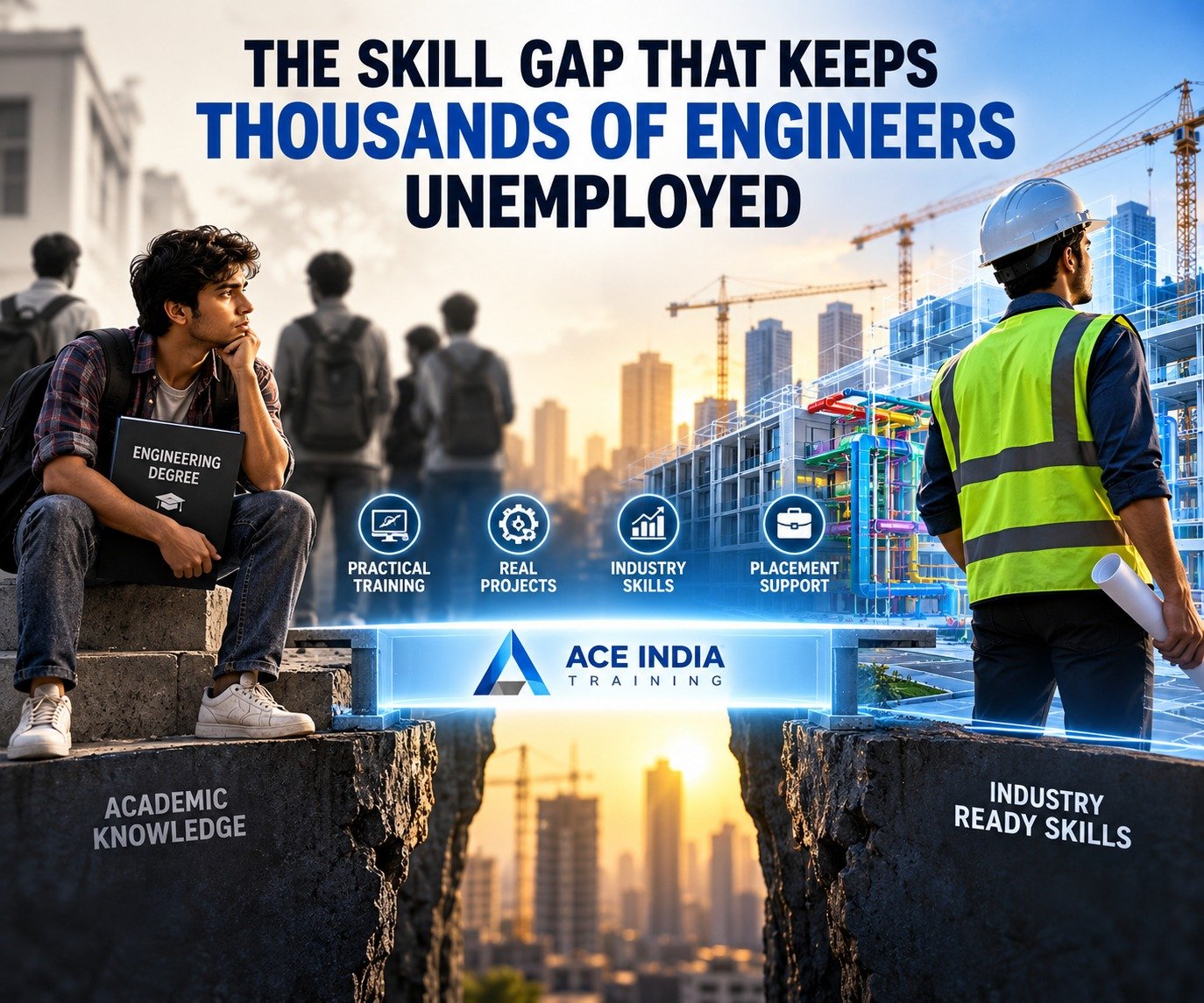
THE SKILL GAP THAT KEEPS THOUSANDS OF ENGINEERS UNEMPLOYED
Every year, thousands of engineering graduates enter the job market with a degree in their hands.
They have completed their examinations.
They have studied engineering theory.
They have earned their certificates.
Yet many struggle to find jobs that match their qualification.
Why?
One of the biggest challenges we see in the industry is not a lack of engineering graduates.
It is the gap between academic knowledge and industry-ready skills.
A degree can show that you have studied engineering.
But employers also need to know:
Can you actually apply that knowledge to a real project?
THE ENGINEERING DEGREE IS ONLY THE BEGINNING
Engineering education provides an important foundation.
Students learn mathematics, engineering principles, design concepts, materials, structures, electrical systems, mechanical systems, and many other technical subjects.
But the workplace demands something more.
An engineer entering the AEC industry may be expected to understand:
• Engineering drawings
• Design software
• BIM workflows
• Revit
• AutoCAD
• MEP systems
• Construction practices
• Project coordination
• Documentation
• International standards
• Communication with project teams
This is where the skill gap becomes visible.
WHAT IS THE SKILL GAP?
The skill gap is the difference between what a graduate knows academically and what an employer expects them to be able to do professionally.
For example, an engineering graduate may understand HVAC theory.
But can they:
• Develop an HVAC layout?
• Model the system in Revit?
• Understand duct routing?
• Coordinate the duct with structure and other MEP services?
• Identify clashes?
• Prepare construction documentation?
• Work according to project standards?
That difference between knowing the concept and being able to execute it can determine whether a candidate is job-ready.
THE AEC INDUSTRY IS BECOMING MORE DIGITAL
The construction industry has changed significantly.
Traditional 2D drafting is increasingly being complemented by digital workflows involving:
• Building Information Modeling (BIM)
• 3D coordination
• Digital construction
• Cloud collaboration
• Clash detection
• Quantity takeoff
• Digital documentation
• Automation
• Digital Twins
As projects become more complex, companies increasingly need professionals who can work within these digital environments.
This creates opportunities—but only for professionals who develop the required skills.
WHY BIM HAS BECOME SO IMPORTANT
BIM is no longer simply about creating a 3D model.
Modern BIM involves coordination, information management, visualization, documentation, collaboration, and project delivery.
A BIM professional may need to work with:
Architecture + Structure + HVAC + Electrical + Plumbing + Fire Protection
and understand how all these systems interact.
This requires more than software knowledge.
It requires engineering knowledge combined with practical BIM skills.
THE PROBLEM WITH LEARNING SOFTWARE ALONE
One common mistake is believing:
“If I learn Revit, I will automatically get a BIM job.”
Revit is an important tool.
But a successful BIM professional needs much more than software commands.
Employers may look for candidates who understand:
• Engineering fundamentals
• Modeling standards
• Construction methodology
• BIM coordination
• Clash detection
• Project documentation
• Level of Development (LOD)
• BIM Execution Plans
• Common Data Environments
• Quality control
• Team collaboration
The goal should not be to become a software operator.
The goal should be to become an industry-ready BIM professional.
FROM CLASSROOM KNOWLEDGE TO PROJECT KNOWLEDGE
Imagine two candidates applying for the same BIM position.
Candidate A has completed an engineering degree and knows the theoretical concepts.
Candidate B has the same engineering foundation but has also worked on practical BIM exercises, coordinated multidisciplinary models, performed clash detection, prepared drawings, and understands how a project moves from design to construction.
The difference is not necessarily intelligence.
The difference is exposure and practical application.
This is why industry-oriented training matters.
WHAT SHOULD AN ENGINEERING GRADUATE LEARN?
A job-ready AEC professional should ideally develop skills in four areas.
1. ENGINEERING KNOWLEDGE
Understand the fundamentals of your discipline.
2. SOFTWARE SKILLS
Learn the tools used by the industry.
Examples include:
Revit
AutoCAD
Navisworks
Dynamo
BIM collaboration platforms
3. PROJECT SKILLS
Understand how your work fits into an actual project.
Learn:
• Modeling
• Coordination
• Clash detection
• Documentation
• Quantity takeoff
• Quality control
• Project workflows
4. PROFESSIONAL SKILLS
Technical knowledge alone isn't enough.
Develop:
• Communication
• Teamwork
• Problem-solving
• Time management
• Presentation skills
• Client interaction
This combination creates a more complete professional.
WHY PRACTICAL PROJECT EXPOSURE MATTERS
One of the biggest differences between classroom learning and professional work is the complexity of real projects.
A real project may involve:
Different disciplines.
Different consultants.
Multiple revisions.
Tight deadlines.
Client requirements.
Coordination issues.
Construction constraints.
Design changes.
Learning how to deal with these situations helps professionals understand what their future workplace actually looks like.
THE ROLE OF INDUSTRY-ORIENTED TRAINING
At ACE India Training & Services Pvt. Ltd., we believe training should bridge the gap between education and employment.
Our approach focuses on combining engineering fundamentals with practical BIM and MEP skills.
Our training areas include:
• MEP Engineering
• BIM Modelling
• Revit
• MEP BIM
• HVAC
• Electrical
• Plumbing
• BIM Coordination
• Clash Detection
• Construction Documentation
The objective is not simply to teach a software package.
It is to help students understand how that software is used within an actual engineering and construction workflow.
TRAINING SHOULD CREATE CONFIDENCE, NOT JUST CERTIFICATES
A certificate can demonstrate that someone completed a course.
But during an interview, employers may ask:
“Can you model this?”
“Can you identify this clash?”
“How would you coordinate this system?”
“Can you understand this drawing?”
“How would you solve this site coordination problem?”
Practical training should prepare students to answer these questions with confidence.
THE FUTURE BELONGS TO MULTI-SKILLED ENGINEERS
The AEC industry doesn't necessarily need engineers who know only one software tool.
It needs professionals who can connect:
ENGINEERING + BIM + SOFTWARE + COORDINATION + COMMUNICATION
That combination can create significantly more career possibilities.
An HVAC engineer who understands BIM can work in BIM-based MEP environments.
An electrical engineer who understands Revit and coordination can pursue electrical BIM roles.
A civil engineer who develops structural BIM skills can explore structural modeling and coordination.
An architect who understands BIM can work within multidisciplinary digital project environments.
The engineering degree provides the foundation.
Practical skills create the bridge to industry.
DON'T WAIT UNTIL YOU GRADUATE TO BECOME JOB-READY
One of the biggest advantages students have is time.
Instead of waiting until graduation to think about employability, start developing industry skills while studying.
Learn.
Practice.
Work on projects.
Make mistakes.
Understand how real buildings are designed and constructed.
Build a portfolio.
Develop communication skills.
By the time you graduate, you should not only be able to say:
“I am an engineer.”
You should be able to say:
“I can contribute to a project.”
THE REAL QUESTION IS NOT "DO I HAVE A DEGREE?"
The more important question is:
"DO I HAVE THE SKILLS THAT THE INDUSTRY NEEDS?"
The AEC industry is evolving.
BIM is becoming an important part of modern project delivery.
Digital construction is growing.
Technology is changing how engineers work.
And companies need professionals who can adapt to these changes.
The opportunity is there.
The challenge is closing the skill gap.
OUR MISSION AT ACE INDIA
At ACE India, our objective is to help bridge the gap between engineering education and industry requirements.
We want students and working professionals to move beyond theoretical knowledge and develop practical skills that they can apply in real-world engineering and construction environments.
Because employability is not created by a certificate alone.
It is created by knowledge + skills + practice + confidence.
Your engineering degree is your foundation.
Your skills are your competitive advantage.
Your practical experience is what makes you industry-ready.
Don't just graduate. Prepare for the industry.
Learn. Practice. Build. Grow.
ACE India Training & Services Pvt. Ltd.
#BIM #Engineering #EngineeringJobs #SkillGap #BIMTraining #MEP #Revit #BIMCareer #EngineeringCareer #DigitalConstruction #AEC #Construction #SkillDevelopment #JobReady #CareerDevelopment #ACEIndia
Subscribe To Receive The Latest News
Add notice about your Privacy Policy here.

Related Articles
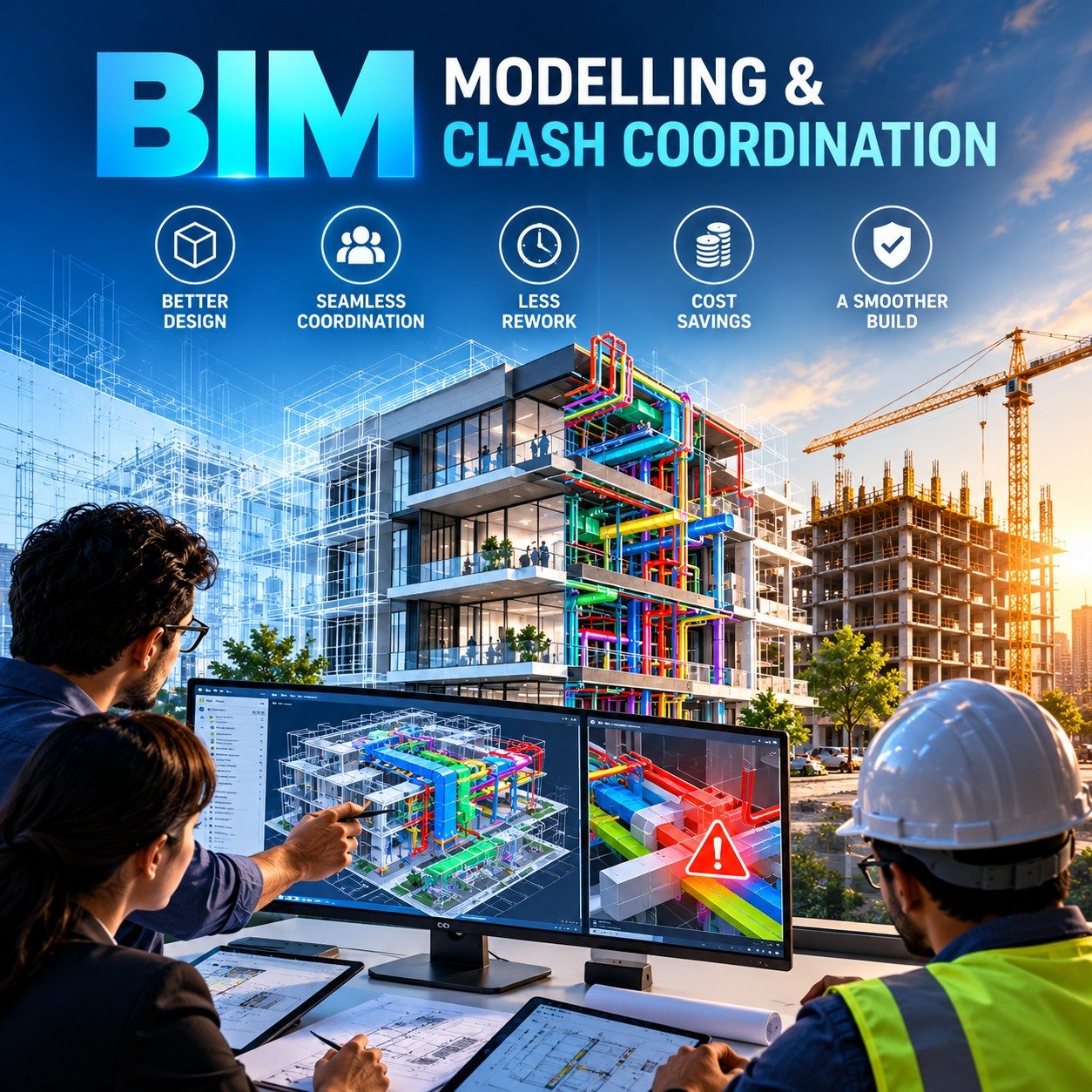
How BIM Helps Builders and Architects Build Better
Explore the latest trends, insights, and updates across the engineering, design, and construction sectors...
Read Article →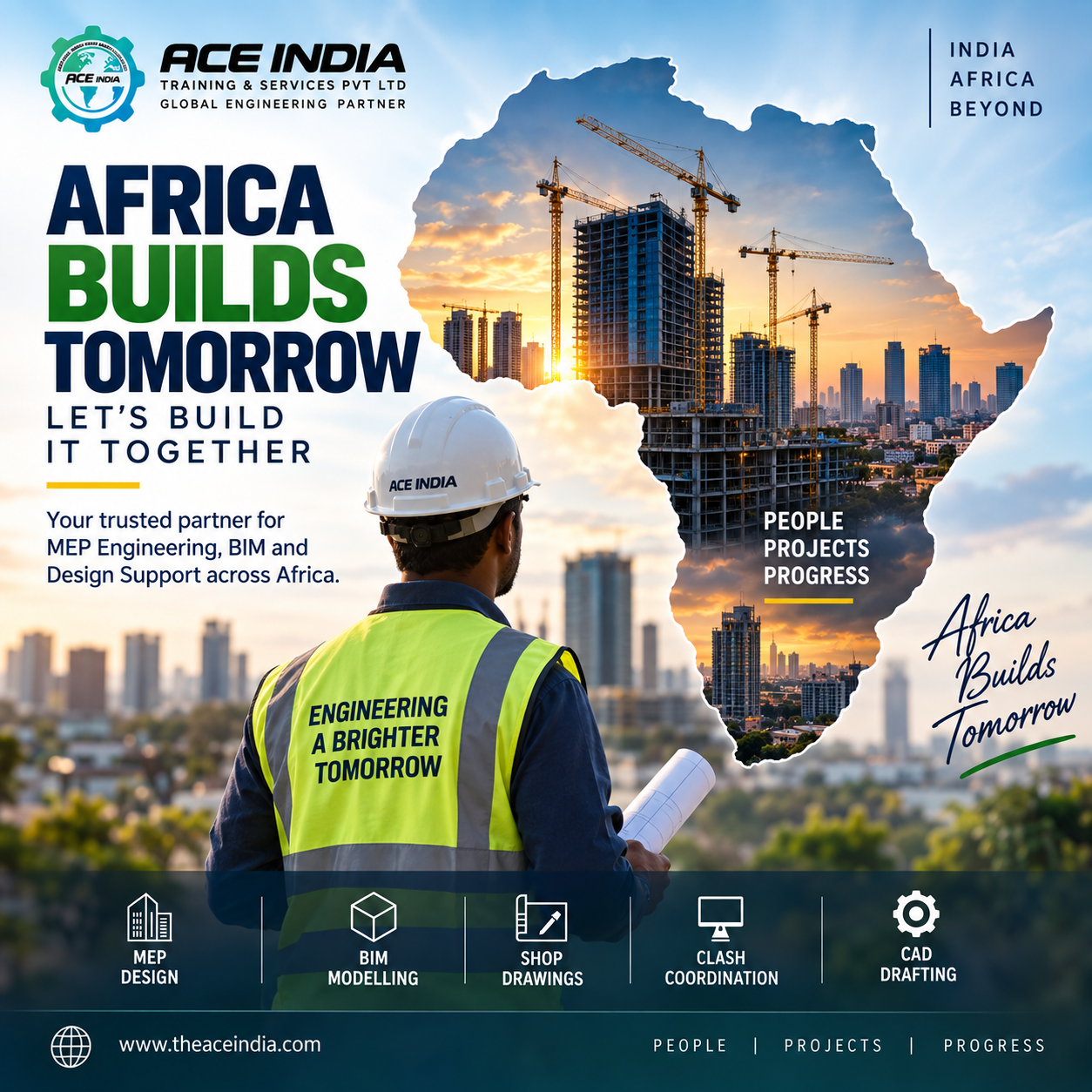
Building a Stronger Africa Together
Explore the latest trends, insights, and updates across the engineering, design, and construction sectors...
Read Article →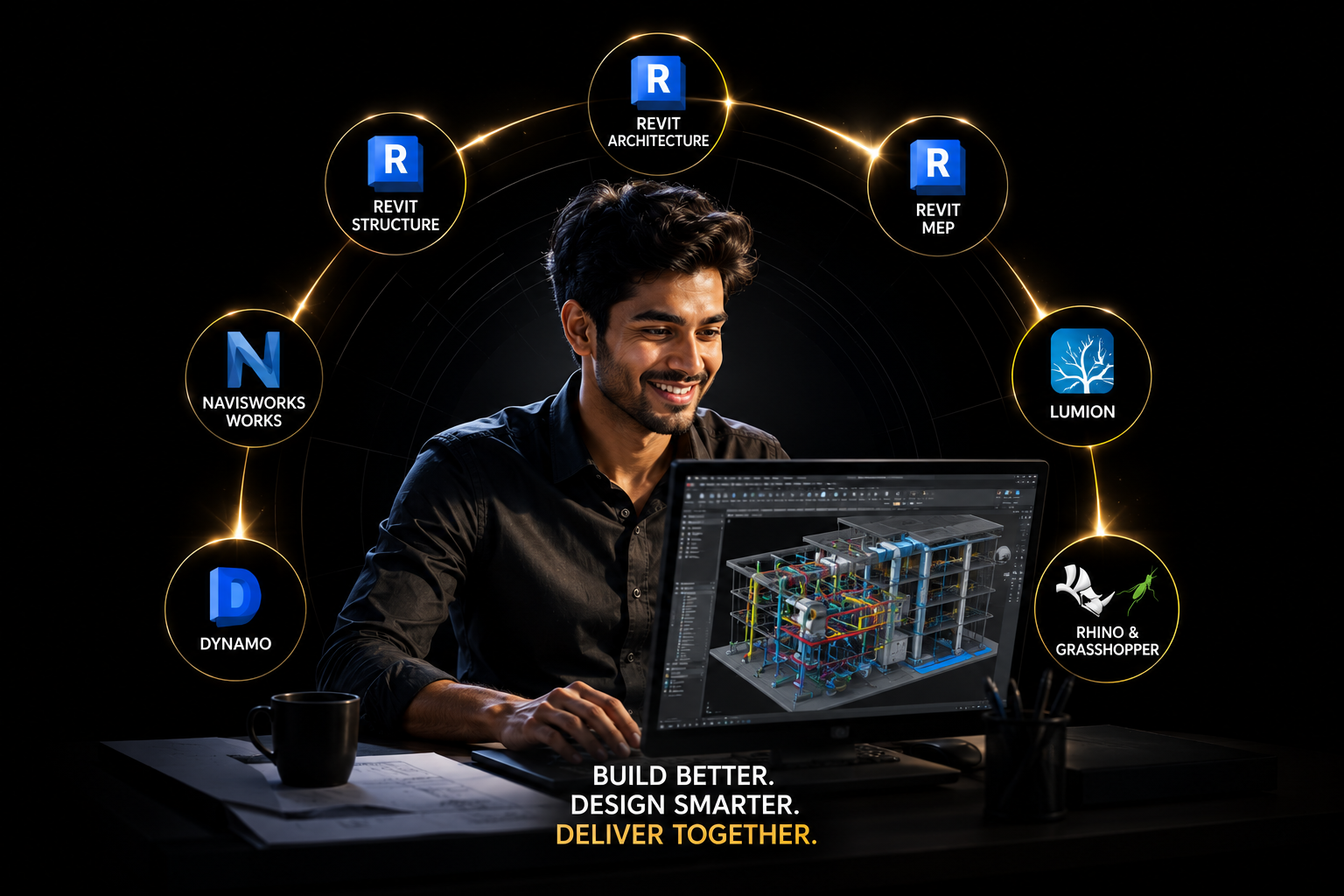
The 7 Essential Software Every BIM Engineer Should Master in 2026
Explore the latest trends, insights, and updates across the engineering, design, and construction sectors...
Read Article →